
Auto Cyber Security: What You Need to Know in 2026
Modern vehicles are no longer just mechanical machines. They're computers on wheels, packed with sensors, wireless connections and software that controls everything from entertainment to braking. This connectivity brings convenience, but it also creates risk. Auto cyber security has become essential as hackers target cars, trucks and the networks they connect to. Whether you're a family driver, a small business managing a fleet, or someone who travels frequently, understanding these threats helps you make smarter decisions about your safety.
Why auto cyber security matters now
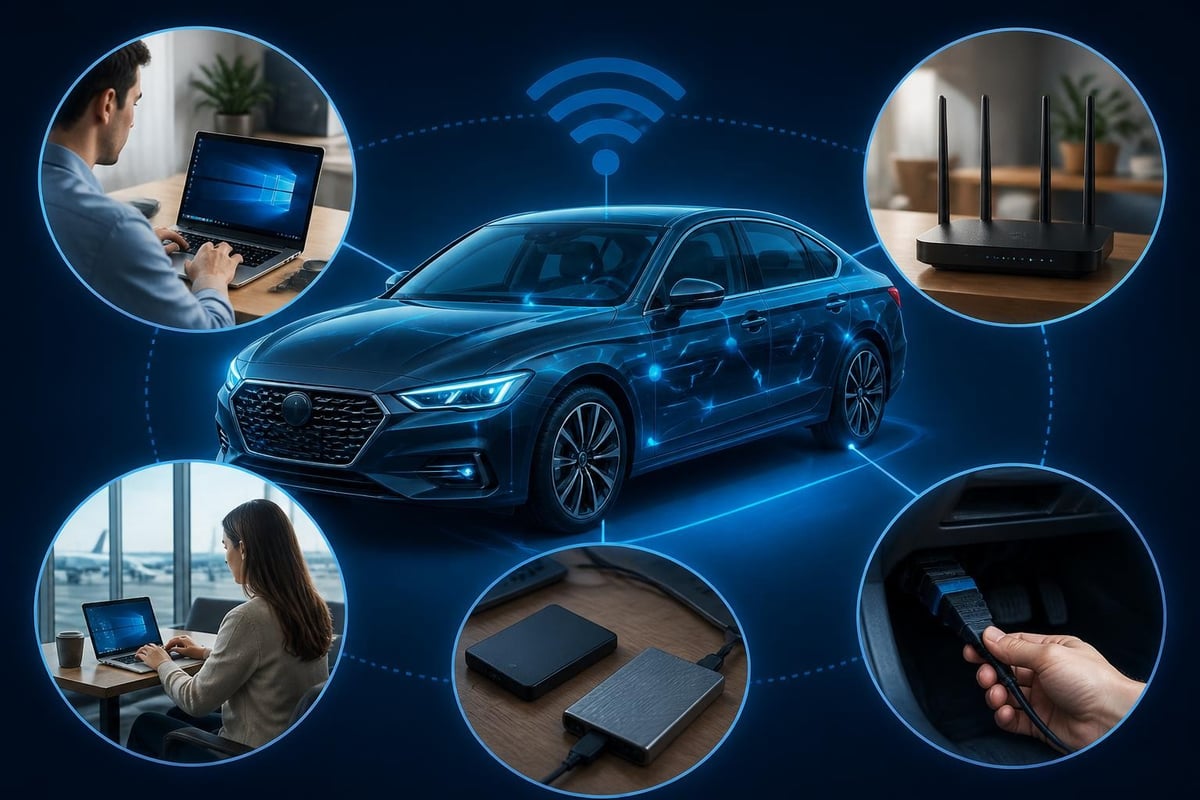
Your car connects to the world in ways you might not notice. It talks to your phone over Bluetooth, receives software updates through cellular networks, and shares data with manufacturers. Each connection is a potential entry point for attackers.
Recent trends show the scale of the problem:
- Vehicles now contain 100 million lines of code or more
- A single car can have 150+ electronic control units (ECUs)
- Wireless updates reach vehicles without your direct involvement
- Third-party apps and integrations expand the attack surface
The ENISA Threat Landscape 2024 highlights how connected systems across all sectors, including transportation, face evolving threats that exploit software vulnerabilities and supply-chain weaknesses.
Real-world threats to vehicles
Auto cyber security isn't theoretical. Researchers and criminals have demonstrated attacks that range from annoying to dangerous.
Key threat categories include:
- Remote exploitation where attackers access vehicle systems through wireless connections without physical access
- USB and diagnostic port attacks using physical access to inject malicious code or bypass controls
- Ransomware targeting fleet management systems that lock operators out of scheduling, tracking or control functions
- Data theft from connected apps that collect location, driving habits and personal information
- Supply-chain compromises in third-party components or software that ship with hidden vulnerabilities
A well-documented case involved researchers remotely controlling a vehicle's steering and brakes through a cellular connection. While manufacturers patched that specific flaw, it showed how interconnected systems create unexpected risks.
How auto cyber security works in practice
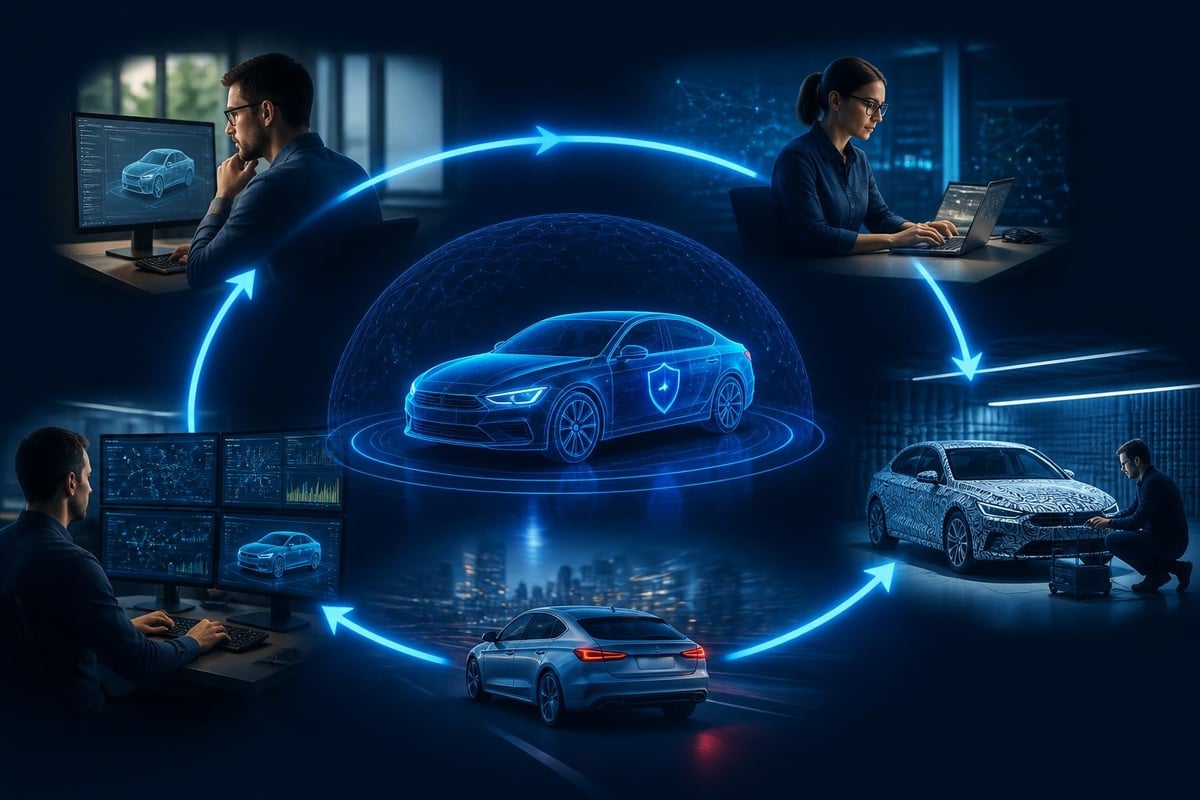
Protecting vehicles requires layers of defence. You can't rely on a single solution when threats come from multiple directions.
| Defence layer | What it does | Example control |
|---|---|---|
| Network segmentation | Isolates critical systems from entertainment and convenience features | Separate networks for braking vs. infotainment |
| Intrusion detection | Monitors communications for unusual patterns or known attack signatures | Alerts when unexpected commands reach the CAN bus |
| Secure boot and code signing | Ensures only verified software runs on vehicle systems | Rejects unsigned firmware updates |
| Over-the-air update validation | Checks updates for authenticity before installation | Cryptographic verification of manufacturer identity |
| Physical port protection | Controls access to diagnostic and service interfaces | Locks or monitors OBD-II port activity |
SAE J3061 provides comprehensive guidance on integrating cybersecurity throughout the vehicle development lifecycle, from concept through production and decommissioning.
Standards shaping the industry
Auto cyber security isn't left to chance. International standards guide manufacturers toward consistent, tested practices.
ISO/SAE 21434 became the primary standard for road vehicle cybersecurity engineering in recent years. It requires manufacturers to identify threats, implement controls, and maintain security throughout a vehicle's life. Regulators in Europe and other regions increasingly mandate compliance.
The Auto-ISAC publications repository offers best practices, threat intelligence and collaborative resources that help the industry respond to emerging risks faster than any single company could alone.
Standards address:
- Threat analysis and risk assessment methods
- Secure development processes and testing
- Incident response and information sharing
- Supply-chain security requirements
- Post-production monitoring and updates
Protecting yourself as a driver
You don't build cars, but you make choices that affect your exposure to auto cyber security risks. Simple habits reduce your vulnerability.
Daily practices that help
Keep software current. When your vehicle notifies you of an available update, install it. Manufacturers push patches to fix discovered vulnerabilities. Delaying updates leaves known holes open.
Review app permissions carefully. Connected car apps often request access to location, contacts, calendars and more. Grant only what's necessary for the features you actually use.
Secure your connected devices. Your phone or laptop connects to your car. If malware infects your device, it might spread through that connection. Running intrusion detection on your Windows laptop, such as NetGuardian Pro, helps catch threats before they reach your vehicle systems.
Monitor for unusual behaviour. If your car's systems act strangely-unexpected warnings, features activating on their own, strange messages on the display-investigate promptly. These could signal a compromise.
Limit third-party device connections. Not every USB gadget or aftermarket diagnostic tool is safe. Stick to manufacturer-approved accessories when possible.
When you travel
Travel increases risk because you connect to unfamiliar networks and may use public charging stations or Wi-Fi.
- Avoid untrusted charging cables. Public USB ports can deliver malware alongside power. Use your own cable or a charge-only adapter.
- Turn off Bluetooth when not needed. It's one less entry point for nearby attackers.
- Use a VPN on your laptop. When you're working from your car or a rental, protecting your internet connection reduces the chance of someone intercepting data that could include vehicle access credentials.
- Check rental vehicles for unusual modifications. Inspect the OBD-II port and interior for devices that don't belong.
The CISA Vehicle Incident Prevention and Mitigation Security Guide provides practical steps for fleet operators and individuals to prevent, detect and respond to security incidents involving vehicles.
Auto cyber security for small businesses
If you run a small business with a few vehicles, you face different challenges than a large fleet operator, but the risks are real.
Consider these priorities:
- Inventory your connected vehicles. Know which vehicles have cellular connections, telematics systems or fleet management software. You can't protect what you don't track.
- Choose fleet management platforms carefully. If you use software to track vehicles, schedule maintenance or monitor drivers, verify the vendor's security practices. Ask about encryption, access controls and incident response plans.
- Train drivers on basic security. Your team should know not to plug unknown devices into vehicle ports and to report suspicious activity immediately.
- Plan for compromise. Have a response plan that covers what to do if a vehicle system is hacked. Include steps to isolate affected vehicles, notify relevant parties and restore normal operations.
Balancing cost and protection
Small businesses often operate on tight budgets. You don't need enterprise-grade solutions, but ignoring auto cyber security creates liability.
Practical, affordable steps include:
- Using strong, unique passwords for vehicle-related accounts and apps
- Enabling two-factor authentication wherever offered
- Keeping a simple log of software versions and update dates
- Subscribing to manufacturer security bulletins
- Building relationships with local service providers who understand cybersecurity
Emerging threats and future considerations
Auto cyber security evolves as vehicles become more autonomous and connected. What's safe today may not be in a year.
Autonomous vehicles expand the risk
As vehicles take over more driving tasks, the consequences of compromise grow. An attacker who can manipulate sensor data or decision-making systems doesn't just steal information-they could cause crashes.
New attack surfaces in autonomous systems:
| System component | Potential threat | Impact |
|---|---|---|
| LiDAR and cameras | Spoofed objects or false readings | Vehicle stops or swerves unexpectedly |
| V2V communication | Malicious messages from fake vehicles | Coordination failures or false hazard warnings |
| HD maps and navigation | Manipulated route data | Vehicles directed to wrong locations |
| AI decision models | Adversarial inputs that confuse algorithms | Unpredictable or unsafe driving behaviour |
Research into these threats is active. The MITRE Cyber Analytics Repository includes detection analytics that can be adapted for vehicle-focused monitoring, helping defenders identify suspicious patterns early.
Supply-chain vulnerabilities
Your vehicle contains parts from dozens of suppliers. Each one introduces software and hardware into the final product. A vulnerability in a single component can affect millions of vehicles.
Supply-chain risks include:
- Outdated libraries or unpatched code in third-party components
- Lack of visibility into subcontractor security practices
- Long development cycles that lock in old software versions
- Insufficient testing of integrated systems
Manufacturers are working to address this through better procurement standards, software bills of materials (SBOMs), and more rigorous supplier audits. As a buyer, you benefit when you choose brands that take these steps seriously.

What to look for when buying a vehicle
Auto cyber security should be part of your purchase decision, just like fuel economy or safety ratings.
Questions to ask dealerships and manufacturers
- How often does this model receive security updates? Look for manufacturers committed to long-term support.
- What communication protocols does the vehicle use? Newer, encrypted standards offer better protection than legacy systems.
- Can I control which features connect wirelessly? The ability to disable connections you don't use reduces exposure.
- What data does the vehicle collect, and where does it go? Understand what information leaves the car and who has access.
- Is there a security disclosure program? Manufacturers that work with researchers tend to find and fix problems faster.
You won't get perfect answers to every question, but asking signals that you care. It also helps you compare options.
Reading between the lines
Marketing materials emphasize convenience but often skip security details. A "fully connected experience" sounds appealing but might mean a larger attack surface. Balance features against risk.
Red flags to watch for:
- Vague or absent security documentation
- Unwillingness to discuss update policies
- Reliance on outdated standards or protocols
- No clear process for reporting vulnerabilities
- History of slow responses to disclosed issues
Staying informed
Auto cyber security changes quickly. Staying current helps you adapt as new threats appear.
Reliable sources for updates:
- Manufacturer security bulletins and recall notices
- Industry groups like Auto-ISAC that share threat intelligence
- Government advisories from CISA and similar agencies in your country
- Security research published at conferences such as Black Hat or DEF CON
- Automotive trade publications that cover technology developments
Set aside time every few months to review what's new. You don't need to become an expert, but awareness helps you recognize when action is needed.
Building good habits
Security isn't a one-time task. It's a habit you build into your routine.
Simple habits that compound over time:
- Check for updates monthly
- Review app permissions quarterly
- Inspect your vehicle for unfamiliar devices when you service it
- Keep your connected devices secure with up-to-date protection
- Share what you learn with family, friends or colleagues who drive
The same principles that protect your home network and personal computers-vigilance, timely updates, and limiting unnecessary access-apply to auto cyber security too. Your Windows laptop or PC running NetGuardian Pro monitors network threats involving Wi-Fi, USB and Bluetooth. Extending that awareness to your vehicle creates a more complete security posture.
Regulatory developments shaping the landscape
Governments worldwide recognize the risks and are stepping in with requirements. These regulations push manufacturers toward better practices, which benefits you.
Recent and upcoming regulations include:
- Europe's UN R155 and R156 require cybersecurity management systems and software update processes for new vehicle types
- China's automotive cybersecurity standards mandate testing, incident response and data protection measures
- US frameworks from NHTSA and CISA offer voluntary guidance with increasing industry adoption
- Data privacy laws like GDPR and CCPA apply to vehicle-collected information in their jurisdictions
Compliance drives baseline security improvements across the industry. When shopping for a vehicle sold in multiple markets, look for models designed to meet the strictest standards.
How regulations affect you
You might not see the direct impact of regulations, but they shape what's available to buy. Manufacturers that meet higher standards offer vehicles with better-tested security controls, clearer update policies and more responsive incident handling.
Benefits you receive:
- Fewer vulnerabilities in new vehicles
- Faster patching when issues are discovered
- Greater transparency about data practices
- Improved accountability when things go wrong
Practical advice for different scenarios
Auto cyber security looks different depending on your situation. Tailor your approach to your needs.
For families
Focus on:
- Vehicles with strong parental controls for teen drivers
- Apps that let you monitor location and driving behaviour securely
- Clear communication with your family about not sharing vehicle access credentials
If you have children using smartphones, teaching them about online safety extends to connected vehicles. Tools that help manage screen time and app access, such as Android parental controls, build habits that transfer to other connected environments.
For frequent travellers
Prioritize:
- Rental car inspection for unfamiliar devices
- Using personal devices and cables instead of public or provided ones
- VPN protection when connecting laptops in vehicles or roadside locations
- Awareness of regional threat levels and local security practices
For small business owners
Emphasize:
- Centralized management of fleet security settings
- Employee training on recognizing and reporting suspicious activity
- Incident response plans that cover vehicle systems
- Vendor due diligence for telematics and tracking services
| User type | Top priority | Secondary focus |
|---|---|---|
| Family driver | Keep software updated | Review app permissions |
| Frequent traveller | Inspect rental vehicles | Use VPN for connected work |
| Small business owner | Train employees | Vet fleet software vendors |
| Tech-savvy enthusiast | Monitor for exploits | Participate in disclosure programs |
Common misconceptions about auto cyber security
Clearing up confusion helps you make better decisions.
Misconception: "My car is too old to be hacked." Older vehicles have fewer electronic systems, but if they connect via Bluetooth or have an aftermarket device plugged into the OBD-II port, they're vulnerable.
Misconception: "Only luxury cars are targeted." Attackers go after high-value targets sometimes, but mass attacks don't discriminate. Any connected vehicle can be a victim.
Misconception: "The manufacturer handles all security." Manufacturers provide updates and patches, but you control app permissions, device connections and update installation. You share responsibility.
Misconception: "Antivirus on my phone protects my car." Phone security helps prevent malware from spreading to your car, but it doesn't protect the vehicle's internal networks. Layered defences matter.
Misconception: "I'll know if I'm hacked." Many compromises are silent. Attackers often collect data or establish persistence without obvious signs. Regular monitoring and vigilance are essential.
Auto cyber security protects the connected systems that power modern vehicles, and your choices matter as much as manufacturer defences. Whether you're safeguarding a family car, managing a small fleet or travelling frequently, simple habits and informed decisions reduce your risk. If you're looking to extend your security beyond the road, NetGuardian Pro provides network intrusion detection and prevention for your Windows 11 PCs and laptops, monitoring threats involving Wi-Fi, USB and Bluetooth with clear alerts and practical controls you can act on without needing an IT background.
Related reading: Cyber Security Critical Infrastructure Protection 2026, Wi-Fi Security: Protecting Windows 11 Networks in 2026, Protection Cyber Security for Windows Networks in 2026.