
Managed Cyber Security Services for Small Businesses
Cyber threats are growing more sophisticated every year, yet many small businesses and solo professionals struggle to keep pace with security demands. You might have antivirus software and a firewall, but questions still linger: Who's watching for unusual network activity at 3am? What happens when ransomware slips past your defences? How do you respond to a data breach when everyone's already stretched thin? This is where managed cyber security services step in, offering continuous monitoring, expert threat response, and strategic guidance without requiring you to hire a full-time security team.
What managed cyber security services actually do
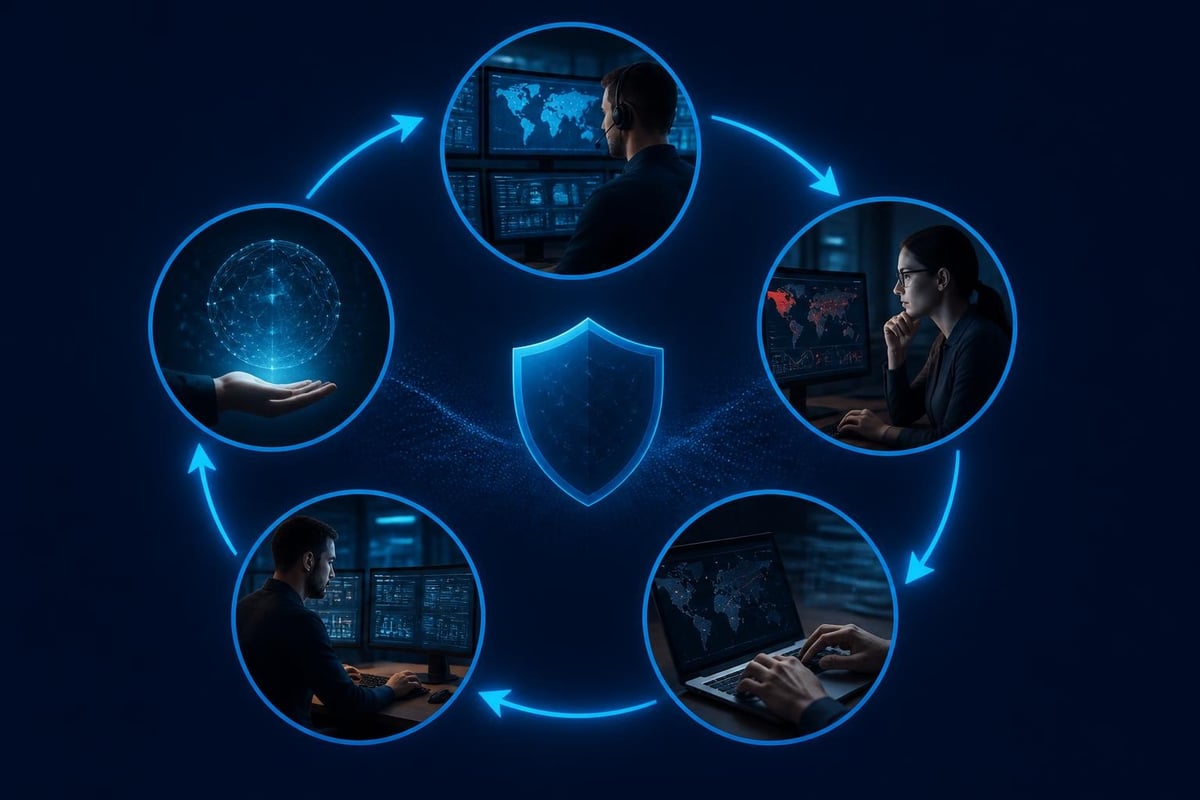
Managed cyber security services deliver ongoing protection through a team of security professionals who monitor your systems, detect threats, and respond to incidents on your behalf. Instead of relying solely on automated tools, you get human expertise combined with advanced technology to watch over your network infrastructure, endpoints, and data.
These services typically include 24/7 network monitoring, where security analysts watch for suspicious patterns that might indicate an intrusion. They review logs, analyse traffic anomalies, and investigate alerts that automated systems flag. When they spot something concerning, they don't just send an alert and hope you notice. They investigate, contain the threat, and guide you through remediation.
Incident response forms another core component. When a security event occurs (whether it's a phishing attack that succeeded, malware spreading across devices, or unauthorised access to sensitive files) the managed security team jumps in to limit damage, remove the threat, and help you recover. This rapid response can mean the difference between a minor incident and a business-stopping breach.
Most providers also handle vulnerability management, regularly scanning your systems for weaknesses that attackers could exploit. They prioritise which vulnerabilities matter most to your specific setup and help you patch them before they become entry points.
The difference between basic IT support and security-focused services
Your existing IT provider might handle software updates, troubleshoot email problems, and maintain your servers. That's valuable work, but it's fundamentally different from dedicated security services. IT support keeps systems running. Managed cyber security services keep systems safe from people actively trying to break in.
Traditional managed service providers (MSPs) focus on operational efficiency: minimising downtime, ensuring backups work, and solving technical problems. They often include basic security measures like antivirus deployment and firewall configuration. But they're not necessarily equipped to hunt for advanced persistent threats, analyse forensic evidence after an incident, or design detection rules based on emerging attack techniques.
Managed security service providers (MSSPs) specialise in threat-focused work. Their analysts study how attackers operate, use frameworks like MITRE ATT&CK to map adversary behaviour, and build detection strategies around real-world attack patterns. They understand that determined attackers will probe for weaknesses, adapt their tactics, and persist until they find a way in.
Some organisations need both: an MSP to handle day-to-day IT operations and an MSSP to layer security monitoring and threat response on top. Others choose a hybrid provider that offers both capabilities. The key is understanding which problems you're solving.
What to look for when choosing a provider
| Consideration | What to evaluate | Why it matters |
|---|---|---|
| Industry certifications | ISO 27001, SOC 2, Cyber Essentials | Shows the provider follows recognised security standards and controls |
| Threat intelligence sources | Where they get threat feeds, how often updated | Determines if they can detect new threats quickly |
| Response time commitments | SLA for alert investigation, incident response start time | Affects how fast threats get contained |
| Transparency | Access to logs, reporting clarity, explanation of actions | Lets you understand what's happening in your environment |
| Customer references | Speak to businesses similar to yours | Validates claims about service quality and expertise |
The UK NCSC guidance on choosing a managed service provider offers a practical checklist of security expectations to include in your procurement process and contracts.
Service models and what they mean for you
Managed cyber security services come in several forms, each addressing different needs and budget levels. Understanding these models helps you match the right service to your actual risks and resources.
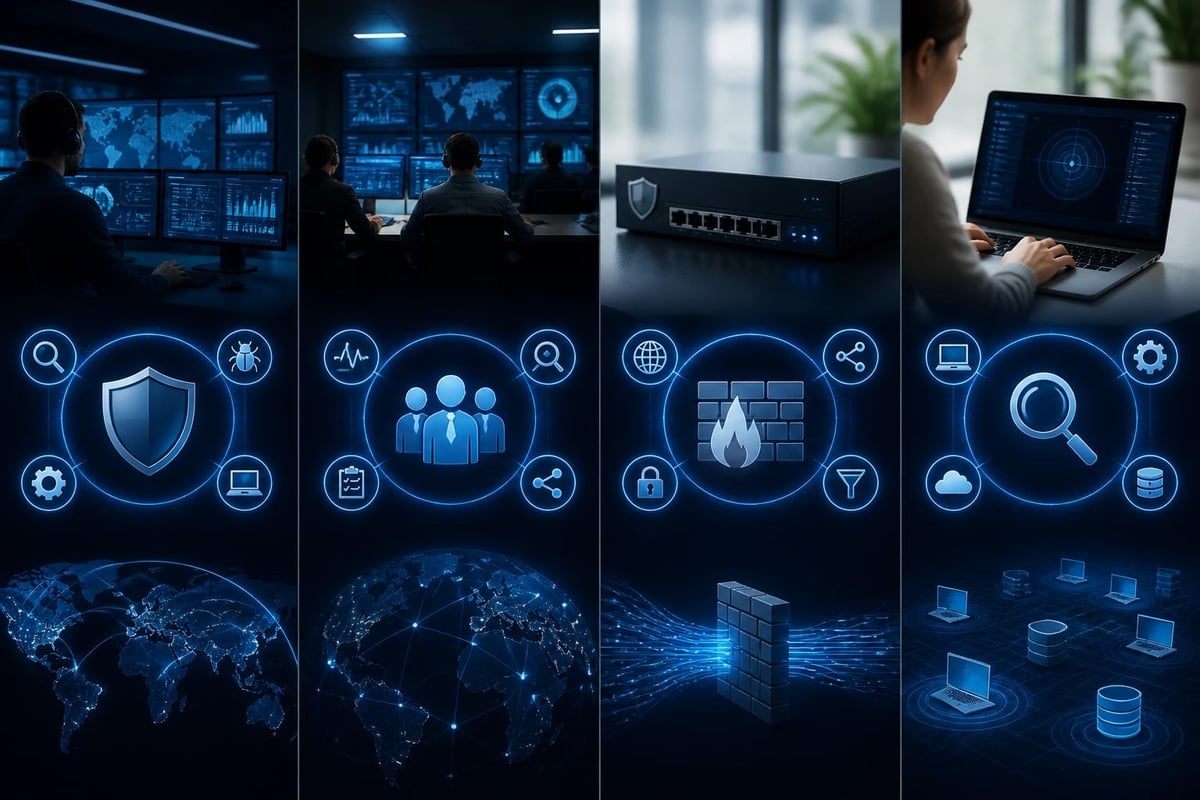
Managed Detection and Response (MDR) provides continuous monitoring of your endpoints, network traffic, and logs. The provider deploys sensors or agents across your infrastructure, collects security data, and analyses it for signs of compromise. When they detect a threat, they investigate and take action to stop it, often without waiting for your approval in time-critical situations.
Security Operations Centre as a Service (SOCaaS) gives you access to a full security operations centre without building one yourself. Analysts work in shifts to provide round-the-clock coverage, triaging alerts, escalating serious incidents, and coordinating response efforts. This model suits businesses that need enterprise-grade monitoring but can't justify hiring their own security team.
Managed firewall and network security focuses specifically on your network perimeter and internal traffic. The provider configures, monitors, and maintains your firewalls, intrusion prevention systems, and VPN gateways. They tune rules based on your traffic patterns and adjust blocking policies as threats evolve.
Vulnerability management services handle scanning, assessment, and remediation tracking. Rather than running scans yourself and wondering which vulnerabilities to fix first, the provider identifies critical exposures, tests for exploitability, and helps you prioritise patches based on actual risk.
Cost structures and realistic budgeting
Pricing for managed cyber security services varies widely based on scope, organisation size, and service depth. Small businesses might pay from $1,500 to $5,000 monthly for basic MDR covering 10-50 endpoints. More comprehensive SOCaaS with network monitoring, vulnerability scanning, and dedicated analyst support can run $5,000 to $15,000 monthly for similar-sized organisations.
Per-user or per-device pricing is common, typically ranging from $50 to $150 per endpoint monthly depending on service levels. Some providers charge based on data volume (how many logs you generate), which can surprise you if your environment is noisy. Always clarify whether pricing includes response actions or just monitoring and alerts.
Setup fees often apply, covering initial environment assessment, sensor deployment, and baseline configuration. These can range from one-time costs of $2,000 to $10,000 or more. Some providers waive setup fees if you commit to longer contracts.
Consider the hidden costs too: time your team spends coordinating with the provider, potential upgrades to infrastructure to support monitoring tools, and bandwidth consumed by logging and reporting. Factor in what you're avoiding as well: the cost of hiring security analysts (easily $80,000 to $120,000 annually per person in major markets), threat intelligence subscriptions, and security tool licensing.
For context, CISA’s risk considerations for MSP customers outlines service expectations and security questions you should ask when evaluating providers, helping you understand what you're actually paying for.
Integration with your existing security tools
You probably already have security investments: antivirus software, firewalls, maybe endpoint detection tools or backup systems. Managed cyber security services should work with these, not require you to rip everything out and start over.
Good providers are tool-agnostic, integrating with your existing security stack rather than forcing you onto their preferred platforms. They should be able to ingest logs from your current firewall, collect alerts from your antivirus, and monitor traffic patterns without demanding wholesale replacement.
That said, they might recommend additional tools to fill visibility gaps. If you don't have endpoint detection and response (EDR) capability, they'll likely suggest deploying agents to collect process-level telemetry. If your firewall doesn't provide detailed logs, they might propose an upgrade or supplementary monitoring appliance.
Be clear about what you own versus what the provider manages. Some services include tool licensing in their fees. Others expect you to purchase and maintain licenses separately. Understand who's responsible for updates, configuration changes, and troubleshooting when something breaks.
For Windows-focused environments, integration considerations include compatibility with Windows 11 security features, proper handling of Windows Event Logs, and coordination with Microsoft Defender or third-party antivirus. Network monitoring should account for Wi-Fi connections, VPN usage, and increasingly, threats from USB and Bluetooth devices that traditional network tools might miss.
Skills you still need in-house
Outsourcing security monitoring doesn't eliminate your internal responsibilities. You still need someone who understands your business context, can make risk decisions, and coordinates with the managed service provider.
Designate an internal security contact who reviews reports, participates in incident calls, and translates security recommendations into business decisions. This person doesn't need to be a security expert, but they should understand your network architecture, know which systems matter most, and have authority to approve changes during incidents.
Your team must handle access management: creating and removing user accounts, managing permissions, and maintaining accurate asset inventories. The MSSP can alert you when they see suspicious privilege escalation, but you decide who should have admin rights in the first place.
Policy creation and enforcement remains your job. The provider can recommend security controls, but you determine acceptable use policies, data classification schemes, and incident response procedures that fit your organisation's culture and regulatory requirements.
Training staff on security awareness is crucial. Even the best monitoring service won't stop employees from clicking phishing links or sharing passwords. Regular training, phishing simulations, and clear reporting procedures reduce the volume of incidents your managed service has to handle. NIST guidance for small businesses offers practical advice on building internal capability while working with external vendors.
Common service limitations to understand upfront
No managed security service can promise perfect protection. Attackers are creative, new vulnerabilities emerge constantly, and some threats evade even sophisticated detection. Understanding limitations helps you set realistic expectations and plan compensating controls.
Most services focus on known indicators and behaviour patterns. If an attacker uses a completely novel technique that doesn't match any signatures or behavioural rules, it might slip through undetected initially. Good providers continuously update their detection capabilities, but there's always a window between when an attack method emerges and when detection coverage exists.
Encryption can blind network monitoring. If all your traffic uses HTTPS (which it should), network sensors can't inspect packet contents without SSL inspection infrastructure. This is a deliberate trade-off: privacy and security from outsiders versus complete visibility for your monitoring service.
Response actions have limits based on your service agreement. Some providers only alert you and provide recommendations. Others can block suspicious IP addresses or isolate compromised devices, but only if you've granted them that authority and configured systems to allow remote actions.
Coverage gaps occur if certain systems aren't monitored. Legacy devices that can't run modern agents, operational technology networks kept separate from IT systems, or cloud environments not included in your service scope may remain blind spots. Map what's covered and what isn't.
Real-world scenarios where these services help
Consider a small professional services firm with 25 employees. One Friday evening, an employee clicks a phishing link while working late. The link installs malware that begins encrypting files and spreading across the network. Without managed security services, this might not be discovered until Monday morning when everyone returns to locked files and ransom demands.
With MDR monitoring in place, the unusual encryption activity triggers alerts within minutes. The analyst on duty investigates, identifies the infected machine, remotely isolates it from the network, and alerts the firm's designated contact. By Monday morning, only one machine needs rebuilding instead of the entire network being held hostage.
Another example: a retailer processes customer payments through a Windows-based point-of-sale system. Attackers compromise the system through an unpatched vulnerability and install memory-scraping malware to steal card data. Traditional antivirus misses it because the malware uses fileless techniques.
An MSSP monitoring network traffic notices unusual outbound connections to a suspicious IP address at odd hours. Investigation reveals the memory scraper sending stolen data. The provider blocks the connection, helps the retailer identify the vulnerability, and coordinates with payment processors to limit fraud exposure.

These scenarios illustrate how managed cyber security services add human judgement to automated defences. Tools generate alerts, but experienced analysts determine which ones matter and how to respond effectively.
Questions to ask before signing a contract
Before committing to a managed security provider, get clear answers to these questions:
What exactly are you monitoring? Don't accept vague answers like "your network." Ask specifically: endpoints, firewalls, cloud services, email security logs, VPN connections? Request a detailed list of data sources they'll collect and analyse.
How do you detect threats? Understand whether they rely solely on signatures, use behavioural analytics, leverage threat intelligence feeds, or employ custom detection rules. Multiple detection methods provide better coverage.
What happens when you find something? Walk through the incident response process step by step. Who gets notified? How quickly? What actions can they take without your approval? What requires your decision?
Where is our data stored and processed? If you're subject to data residency requirements or have privacy concerns, verify where logs and security data reside. Understand retention periods and access controls.
How do you handle false positives? Every monitoring service generates some false alarms. Ask how they tune detection to reduce noise and what process exists for reporting false positives that waste your time.
What's your staff turnover and analyst experience? High turnover means you're constantly getting junior analysts who need time to learn your environment. Ask about training programs and experience requirements.
The Canadian Centre for Cyber Security guidance on contracting managed service providers provides a procurement-focused checklist and operational controls worth reviewing before finalising agreements.
How to measure if you're getting value
You can't judge a managed security service just by counting alerts or blocked threats. More alerts doesn't mean better protection; it might just mean poor tuning. Focus on meaningful metrics:
| Metric | What to track | What good looks like |
|---|---|---|
| Mean time to detect (MTTD) | How long between breach start and detection | Trending downward over time |
| Mean time to respond (MTTR) | How long from detection to containment | Consistently meeting SLA targets |
| Alert quality | Ratio of true positives to false positives | Improving as tuning matures |
| Coverage percentage | Portion of environment actively monitored | 90%+ of critical assets |
| Incident outcomes | Whether incidents were contained before major damage | Few breaches escalate to data loss |
Ask for monthly reports that explain what they detected, how they responded, and what trends they're seeing in your environment. Good reports provide context, not just numbers. They should highlight risks specific to your business and offer actionable recommendations.
Schedule quarterly reviews to discuss the threat landscape, assess whether your service scope still matches your risks, and adjust coverage as your business changes. If you've added cloud services or remote workers, ensure monitoring extends to those new attack surfaces.
Judge responsiveness during incidents. Do analysts communicate clearly? Do they explain technical findings in language you understand? Do they help you improve rather than just react to problems?
Complementary controls you still need
Managed cyber security services work best as part of a layered security strategy, not as your only defence. You still need strong fundamentals:
- Regular backups stored offline or in immutable storage, tested periodically to ensure recovery actually works
- Patch management processes that apply security updates promptly, especially for critical vulnerabilities
- Access controls using least-privilege principles and multi-factor authentication for sensitive systems
- Security awareness training so employees recognise phishing, social engineering, and suspicious behaviour
- Endpoint protection through antivirus and, increasingly, endpoint detection and response tools that monitor process behaviour
For Windows environments, consider network-level monitoring that runs locally on devices and can detect threats even when they're not connected to your corporate network. Travelling users connecting to hotel Wi-Fi or coffee shop networks face risks that centralised monitoring might miss. Solutions that monitor Wi-Fi, USB, and Bluetooth connections at the PC level add coverage where traditional managed services have gaps.
Recognise that managed cyber security services excel at detecting and responding to threats, but they depend on you maintaining a secure baseline. If you never patch, use weak passwords, or ignore basic security hygiene, even the best monitoring service will be overwhelmed fighting preventable problems.
Regulatory and compliance considerations
If your business handles regulated data (healthcare records under HIPAA, payment cards under PCI DSS, or personal data under GDPR), managed cyber security services can help demonstrate compliance, but they don't guarantee it automatically.
Many compliance frameworks require continuous monitoring and documented incident response capabilities. An MSSP provides evidence you're actively watching for security events and can respond appropriately. They generate logs and reports auditors often request.
However, you remain responsible for compliance. The service provider monitors systems, but you own the data and bear liability for breaches. Ensure your contract clearly defines responsibilities for security controls each framework requires.
Some providers specialise in specific regulatory environments and understand what auditors expect. If you're in a regulated industry, prioritise vendors with relevant experience who can speak your compliance language.
ENISA resources and publications about managed security services include useful material on regulatory context, particularly the EU initiative to develop certification schemes for managed security services.
Making the transition smoothly
Moving to managed cyber security services requires planning. Don't expect the provider to start protecting you the day you sign the contract. Plan for a 30 to 90-day onboarding period covering:
- Environment discovery where the provider maps your network, identifies assets, and documents data flows
- Baseline establishment to understand normal activity patterns before tuning alerts
- Tool deployment if agents, sensors, or monitoring appliances are needed
- Integration with existing security tools and ticketing systems
- Process alignment so everyone knows who does what during incidents
- Training for your internal contact and relevant staff
Expect higher alert volumes initially as the system learns your environment. Work with the provider to tune detection rules and reduce noise without compromising security. This is normal and improves over time.
Maintain open communication during the transition. Schedule weekly check-ins to address questions, review early findings, and adjust scope if initial assumptions prove wrong. The provider needs to understand your business priorities, and you need to understand their methodology.
Document escalation procedures clearly. Who should they contact at 2am when they detect ransomware? What communication channels work best? What authority do they have to take disruptive actions like isolating infected devices?
Alternative approaches for smaller budgets
If comprehensive managed cyber security services exceed your budget, consider these alternatives that provide some benefits at lower cost:
Co-managed security combines automated monitoring tools with as-needed analyst support. You deploy security software that continuously watches your environment, but only pay for professional investigation when the system detects something suspicious. This works if you have internal IT staff who can handle routine alerts and triage.
Managed detection for endpoints only focuses protection on computers and servers rather than trying to monitor everything. This provides value if most of your risk comes from malware, ransomware, and attacks targeting devices rather than network infrastructure.
Periodic security assessments with an MSSP can identify vulnerabilities and provide remediation guidance quarterly or annually, even if continuous monitoring isn't affordable. This doesn't provide real-time protection but helps you understand and reduce risk systematically.
Security information sharing communities and threat intelligence feeds give you access to attack indicators and defensive strategies others have validated. While this doesn't replace monitoring, it helps you configure existing tools more effectively.
For individuals, families, and very small businesses, local security tools that monitor network activity at the device level offer protection when travelling or working remotely. These tools won't replace enterprise-grade monitoring but can detect threats targeting Wi-Fi connections, USB devices, and Bluetooth vulnerabilities that centrally managed services might miss.
Managed cyber security services bridge the gap between the protection you need and the expertise available in-house, but they work best when you understand what you're buying and maintain realistic expectations. Choose providers carefully, clarify responsibilities upfront, and remember that outsourcing monitoring doesn't mean outsourcing accountability. Whether you need comprehensive SOCaaS or just endpoint monitoring, the right service model depends on your actual risks, budget, and internal capabilities. NetGuardian Pro complements managed services for Windows environments by providing network intrusion detection directly on PCs and laptops, monitoring Wi-Fi, USB, and Bluetooth threats even when devices aren't connected to your corporate network, giving you visibility wherever your team works.
Related reading: Enterprise Information Security for Growing Businesses, UK Cyber Security Basics: The NCSC Checklist for Windows Users.