Information Security Security for Windows Home Users
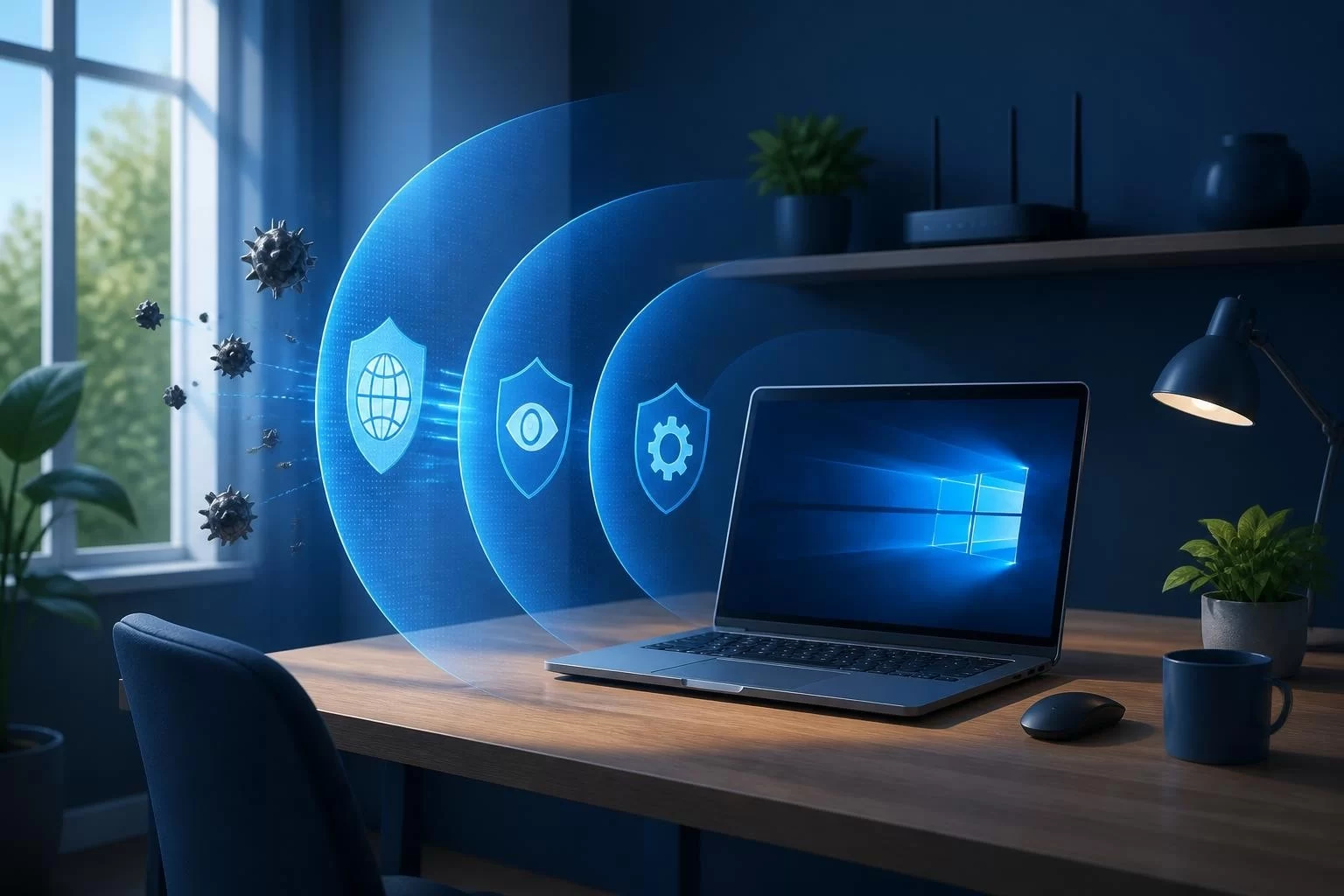
If you've ever searched for help protecting your Windows PC, you've probably noticed the phrase "information security security" appearing in articles and guides. At first glance, it might look like a typo. But this doubled phrasing actually points to something important: security itself needs to be secured. In practical terms, information security security means building protections that watch over your existing defenses, ensuring nothing slips through and alerting you when something unusual happens. For families with years of photos on their laptop or small businesses without an IT department, understanding this layered approach can mean the difference between a safe PC and a costly ransomware attack.
What information security security really means
The phrase sounds redundant, but it captures a critical idea. Your Windows PC already has built-in protections like Windows Defender, your firewall, and automatic updates. That's your first layer of information security. But what happens when a threat sneaks past those defenses, or when an attacker uses legitimate Windows tools in malicious ways? That's where information security security comes in.
Think of it this way: a prevention tool like antivirus software is your front-door lock. Information security security is the motion sensor inside your house that alerts you when someone's already in. Both matter.
Why one layer isn't enough
Windows Defender does an excellent job preventing known malware from infecting your PC. But modern threats often bypass traditional antivirus entirely. Attackers abuse PowerShell scripts, trusted system utilities, or network vulnerabilities that don't involve a malicious file at all.
Common bypass techniques include:
- Living-off-the-land attacks using certutil, mshta, or Windows Script Host
- Ransomware that encrypts files slowly to avoid detection
- Spyware delivered through USB drives at coffee shops
- Evil-twin Wi-Fi networks capturing your passwords before they're encrypted
Each of these requires detection, not just prevention. That's the heart of information security security: layering watchful eyes over your existing protections.
Real-time detection engines and why they matter
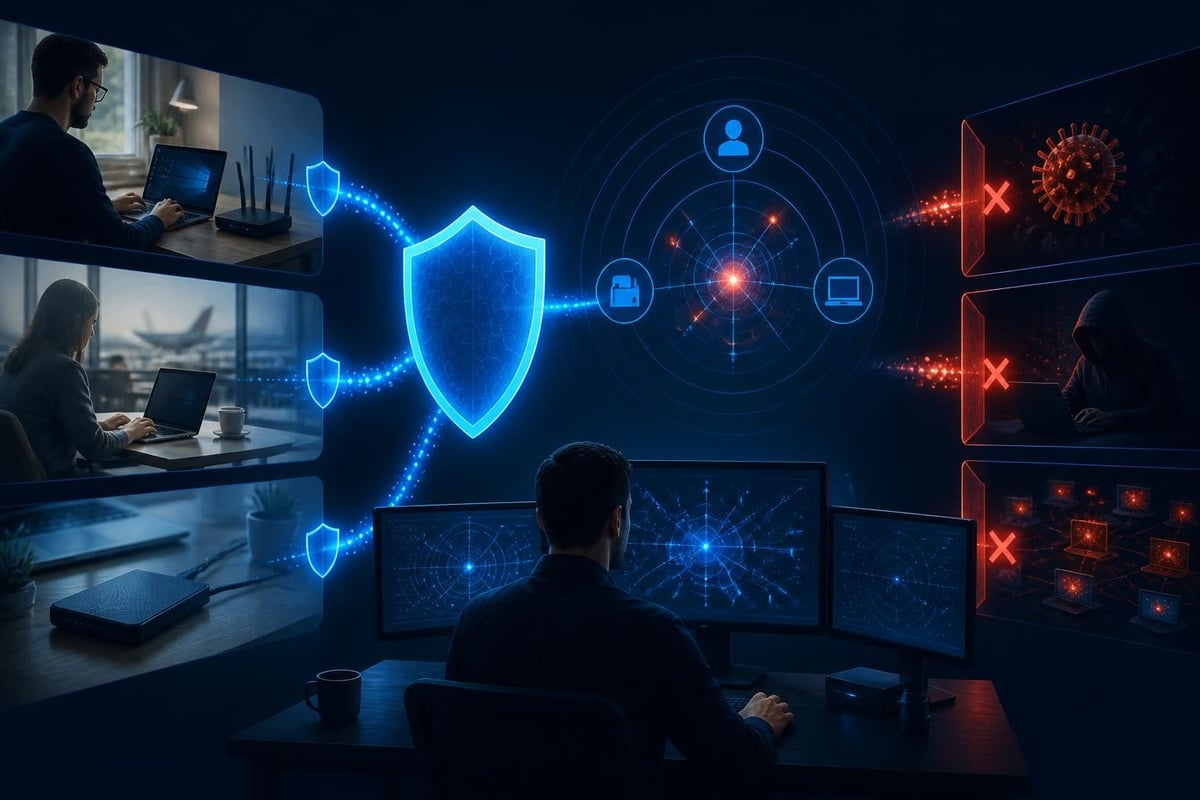
When security experts talk about information security security, they're usually referring to real-time detection systems that run continuously on your machine. These aren't scanning files for virus signatures. Instead, they're watching behavior.
A ransomware behaviour monitor, for instance, watches for rapid file encryption patterns. If something starts changing hundreds of your photos into unreadable files, the detection engine stops it immediately and alerts you in plain language: "A program tried to encrypt your documents. We stopped it."
Eleven engines working together
An effective information security security setup runs multiple detection engines simultaneously. Each watches a different attack surface:
- Ransomware behaviour monitoring catches encryption activity before your files are lost
- Network intrusion detection spots attackers scanning your PC from the outside
- Wi-Fi attack detection alerts you to evil twins, rogue access points, and deauthentication attacks
- USB threat scanning checks every thumb drive before malware can spread
- Spyware and remote-access-trojan detection finds hidden programs calling home
- Abuse-of-trusted-tools monitoring catches PowerShell, certutil, and mshta misuse
- Port-scan and brute-force detection stops attackers probing your network
- Malicious-DNS blocking prevents connections to known command-and-control servers
- Hosts-file tamper alerts warn you if malware redirects legitimate websites
- Vulnerability scanning finds outdated software attackers could exploit
- VPN protection encrypts your traffic on public Wi-Fi
No single engine catches everything. But together, they create overlapping fields of view. That's information security security in action.
| Detection Engine | What It Watches | Example Threat |
|---|---|---|
| Ransomware monitor | File encryption patterns | WannaCry, Ryuk variants |
| Network intrusion | Incoming attack traffic | Port scans, exploit attempts |
| Wi-Fi detection | Rogue networks, packet injection | Evil-twin hotspots, deauth floods |
| USB scanner | Removable-drive contents | BadUSB, auto-run malware |
| PowerShell monitor | Script execution, cmdlets | Fileless malware, lateral movement |
| DNS blocker | Domain lookups | C2 callbacks, phishing redirects |
Each engine reports in language you understand, not error codes. "Your PC detected a port scan from 192.168.1.47. This usually means someone's probing your network. Recommended fix: Check your router's connected devices."
Why local detection beats cloud-only security
Many modern security products send everything to the cloud for analysis. Your files, your network traffic, your browsing history all leave your PC for someone else's server. For information security security, that creates two problems.
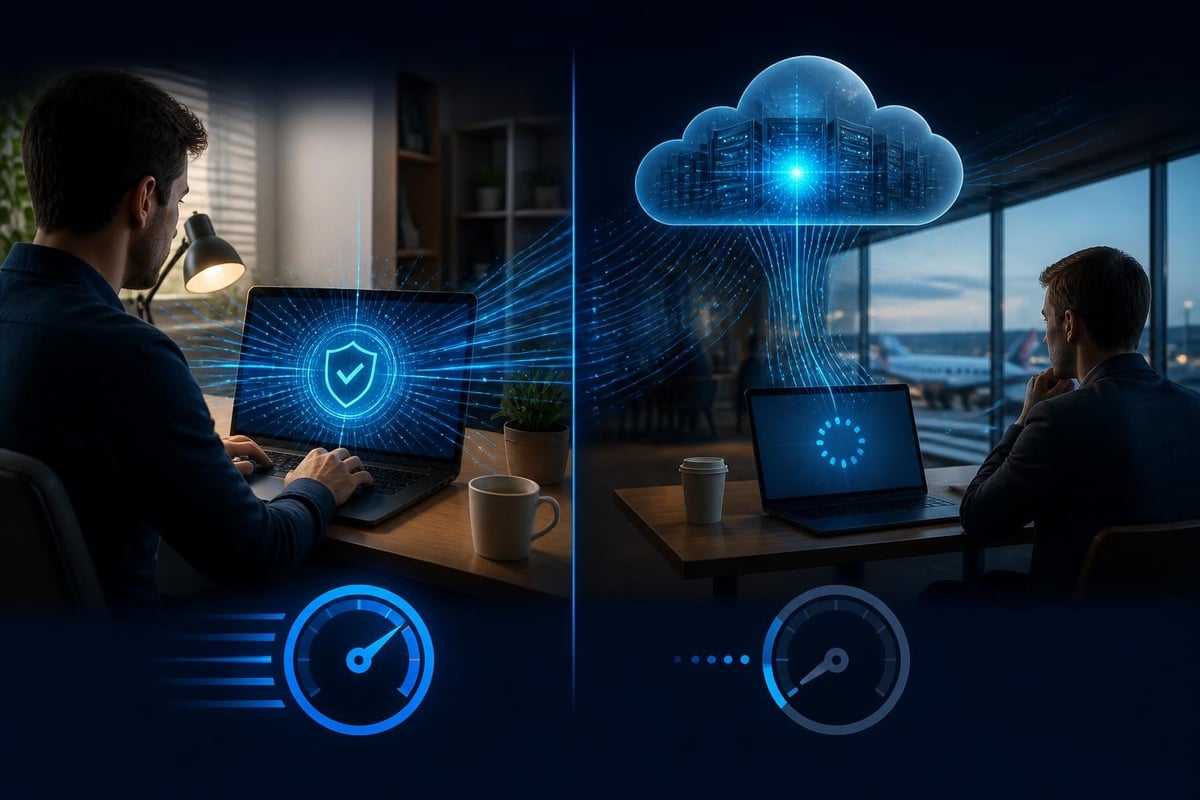
First, cloud analysis introduces delay. By the time a file is uploaded, scanned, and the result returned, ransomware could have encrypted half your documents. Local detection engines running on your own PC respond in milliseconds.
Second, cloud dependency means you're not protected when the internet is down or slow. If you're working offline on a train or in a rural area, cloud security simply stops working. Local engines keep watching.
Privacy as part of security
Information security security also means securing your information from unnecessary exposure. When eleven detection engines run entirely on your Windows 10 or 11 machine, your family photos and business documents never leave your control. No cloud account. No data upload. No third-party access.
This local-first approach aligns with the zero-trust principles outlined by CISA, which emphasize verification at every layer without assuming any network or service is inherently safe.
Information security security for travelers and public Wi-Fi
If you use your laptop at airports, hotels, or coffee shops, information security security becomes especially urgent. Public Wi-Fi networks are hunting grounds for attackers setting up evil-twin access points and rogue routers.
An evil twin is a fake Wi-Fi network with a legitimate-sounding name like "Starbucks Guest" or "Airport_Free_WiFi." When you connect, the attacker can intercept everything you send: passwords, bank logins, work emails. Your PC has no way to tell the difference without active Wi-Fi threat detection.
How Wi-Fi attack detection works
Advanced detection engines monitor several wireless threat vectors:
- Evil-twin detection compares network fingerprints to spot impersonators
- Rogue access point alerts identify unauthorized routers on your network
- Deauthentication attack blocking prevents forced disconnections that push you to a malicious network
- ARP spoofing detection catches attackers redirecting your traffic
When combined with a built-in VPN, you get two-layer protection. The detection engine warns you about suspicious networks. The VPN encrypts your traffic even if you're already connected to a dangerous one.
According to the ENISA Threat Landscape 2024 report, public Wi-Fi attacks remain one of the top risks for mobile workers and travelers, making this kind of information security security essential for anyone working outside their home network.
Living-off-the-land attacks and why they bypass antivirus
One of the hardest challenges in information security security is detecting attacks that use legitimate Windows tools. These "living-off-the-land" techniques abuse PowerShell, certutil, mshta, and other built-in utilities to avoid triggering traditional antivirus.
For example, an attacker might use PowerShell to download and execute ransomware entirely in memory, never writing a malicious file to disk. Windows Defender sees nothing suspicious because PowerShell itself is trusted software.
Behavioral monitoring for trusted tools
Effective information security security watches how these tools are used, not just whether they're present. A detection engine flags:
- PowerShell launching with hidden windows or bypassing execution policies
- Certutil downloading files from the internet (its intended purpose is certificate management)
- Mshta executing JavaScript or VBScript from remote URLs
- Windows Script Host running obfuscated code
The MITRE ATT&CK framework documents hundreds of these techniques, categorizing exactly how attackers abuse legitimate software. Detection engines map their alerts to these known tactics, so you understand not just what happened but why it matters.
When your PC alerts you that "PowerShell attempted to download a file with the -NoProfile flag, often used by malware," that's information security security giving you context, not just a warning.
Small business protection without an IT team
If you run a small business, information security security solves a specific problem: you need enterprise-grade protection without hiring a security team or paying for cloud subscriptions.
Key advantages for small businesses:
- No monthly fees: One-time purchase means predictable costs
- No cloud dependency: Works during internet outages and protects customer data privacy
- Plain-language alerts: Anyone on your team can understand "USB drive contains suspicious auto-run file. Safely eject it now."
- Layered protection: Multiple engines cover different attack surfaces without needing separate products
Many small businesses assume Windows Defender is enough. It's a solid prevention tool, but information security security requires detection as well. When ransomware slips through, or an employee's laptop connects to a rogue Wi-Fi network, real-time alerts let you respond before damage spreads.
The NIST Cybersecurity Framework emphasizes five core functions: Identify, Protect, Detect, Respond, and Recover. Most small businesses focus entirely on "Protect" (antivirus, firewalls). Information security security adds the "Detect" and "Respond" layers that catch threats already inside your network.
Vulnerability scanning as preventive detection
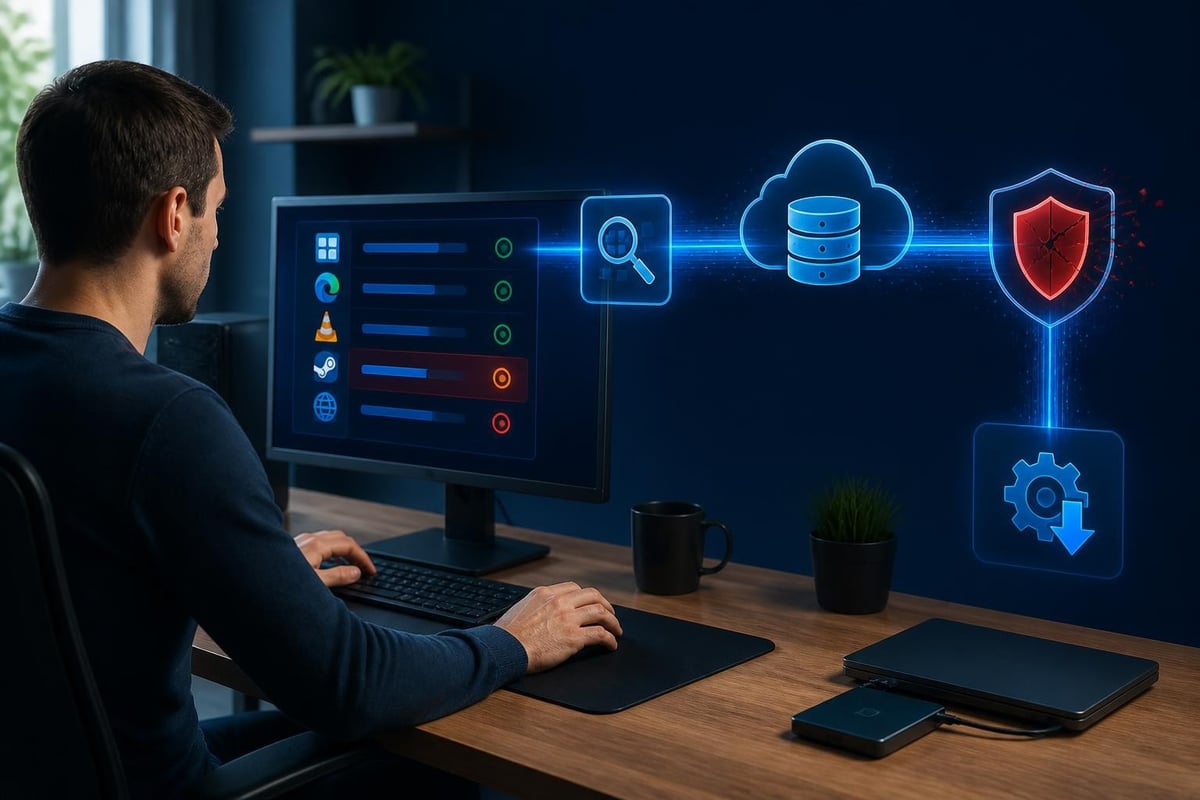
One often-overlooked aspect of information security security is finding weaknesses before attackers do. Vulnerability scanning checks your installed software against databases of known security flaws.
For example, if you're running an outdated version of Adobe Reader with a known exploit, a vulnerability scan identifies it and tells you in plain language: "Adobe Reader 2023 has a critical security flaw. Update to version 2024 or later."
How vulnerability data works
Security researchers catalog every discovered software vulnerability in the National Vulnerability Database, assigning each a CVE number and severity score. When a vulnerability scanner runs on your PC, it compares your installed programs to this database and flags anything risky.
| Severity Level | CVSS Score | What It Means | Example Action |
|---|---|---|---|
| Critical | 9.0-10.0 | Remote code execution without user interaction | Patch immediately |
| High | 7.0-8.9 | Privilege escalation or data theft possible | Patch within 7 days |
| Medium | 4.0-6.9 | Requires user interaction to exploit | Patch during next maintenance |
| Low | 0.1-3.9 | Limited impact or difficult to exploit | Monitor for updates |
This proactive detection is another pillar of information security security. Rather than waiting for an exploit attempt, you close the door before attackers find it.
Self-learning engines and personalized alerts
Generic security alerts are frustrating. "Threat detected" doesn't tell you what happened or what to do. Information security security improves when the system learns your specific PC and writes alerts tailored to your situation.
A self-learning engine watches normal behavior on your machine. It knows which programs you run regularly, which network connections you make, and which USB drives you typically use. When something breaks that pattern, the alert includes context.
Instead of "Suspicious network activity detected," you get "A program you've never used before tried to connect to an IP address in Russia. Recommended fix: Block this connection and scan for spyware."
Plain-language recommendations
Every detection engine should translate technical findings into clear next steps:
- "Your PC detected a port scan. This means someone is probing for open services. Check your router's firewall settings."
- "A USB drive tried to run a program automatically. This could be malware. Scan the drive before opening files."
- "Your hosts file was modified to redirect google.com. Malware often does this. Restore the original file."
For non-technical users, this plain-language approach turns information security security from intimidating to manageable. You don't need to understand DNS hijacking to know that reverting your hosts file will fix the problem.
Why information security security runs alongside Windows Defender
A common question: if Windows 10 and 11 include Windows Defender, why do you need anything else? The answer lies in the difference between prevention and detection.
Windows Defender prevents known malware from infecting your PC. It scans files, blocks malicious websites, and quarantines threats. It's excellent at what it does. But prevention can't catch everything.
Information security security complements Defender by detecting threats that slip through: ransomware that behaves like a normal program until it starts encrypting files, network intrusions that don't involve files at all, or spyware hiding inside a trusted application.
How they work together:
- Defender blocks the majority of threats at the perimeter
- Detection engines watch for suspicious behavior inside the system
- When something bypasses prevention, detection catches it
- You get an alert with a clear recommended fix
- Both tools run simultaneously without conflicting
The SANS Institute white papers on defense-in-depth consistently emphasize this layered approach. No single security control is perfect. Overlapping protections catch what individual tools miss.
Practical steps to implement information security security
If you're ready to add detection layers to your Windows PC, here's how to approach it practically:
For home users:
- Keep Windows Defender enabled (it handles prevention)
- Add real-time detection engines for ransomware, network intrusions, and Wi-Fi threats
- Enable vulnerability scanning to catch outdated software
- Use a VPN when traveling or on public Wi-Fi
- Review alerts weekly and follow recommended fixes
For small businesses:
- Deploy detection software across all Windows PCs
- Train employees to recognize and report alerts
- Schedule monthly vulnerability scans
- Document common alert types and responses
- Ensure offline protection (no cloud dependency for daily operations)
Information security security doesn't require deep technical knowledge. It requires running the right tools and paying attention when they alert you to problems.
One-time purchase versus subscription models
Many security products require ongoing subscriptions, sometimes costing hundreds of dollars per year. For families and small businesses on tight budgets, this creates financial strain. Information security security can be more affordable with one-time purchase models.
A perpetual license means you pay once and own the software forever. No monthly fees. No automatic renewals. The software continues protecting your PC whether or not you maintain a subscription.
This model works particularly well when security engines run locally on your PC rather than depending on cloud services. Since there are no ongoing server costs to support your specific installation, vendors can offer permanent licenses without compromising their business.
| Model | Cost Structure | Best For | Downsides |
|---|---|---|---|
| Subscription | $50-150/year | Users who want continuous updates and cloud features | Ongoing expense, stops working if you cancel |
| One-time purchase | $100-200 once | Families and small businesses watching budgets | May require separate purchase for major updates |
| Freemium | Free with paid upgrades | Testing before buying | Limited features, often cloud-dependent |
For information security security on a family laptop or a small business with five PCs, one-time purchases eliminate the worry that your protection will lapse if you forget to renew.
Understanding false positives and alert fatigue
No detection system is perfect. Sometimes information security security engines flag legitimate activity as suspicious. These false positives are frustrating but manageable with self-learning technology.
A false positive might look like: "PowerShell executed with administrative privileges. Possible malware activity." But you were installing a legitimate program that required a PowerShell script.
How to handle false positives
- Read the alert carefully: Self-learning engines provide context about why the activity is unusual
- Check whether you initiated the action: If you just plugged in a USB drive, that explains the USB scanner alert
- Mark it as safe: Most systems let you whitelist known-good programs and devices
- Watch for patterns: If the same alert repeats for legitimate activity, adjust your detection rules
Over time, the self-learning engine reduces false positives by understanding your normal patterns. The first week might generate more alerts as the system learns. After that, you'll only see genuinely unusual activity.
Alert fatigue happens when you get so many notifications that you start ignoring them. Good information security security design prevents this by prioritizing critical alerts and batching low-severity findings into weekly summaries.
Information security security isn't about replacing Windows Defender or building a fortress that blocks everything. It's about adding layers of detection that catch the threats prevention misses and giving you clear, actionable alerts when something suspicious happens. For families protecting years of photos and small businesses without IT departments, this practical, layered approach makes security manageable rather than overwhelming. NetGuardian Pro delivers exactly this kind of information security security with eleven real-time detection engines running locally on your Windows PC, plain-language alerts tailored to your machine, and a one-time purchase model that fits any budget.