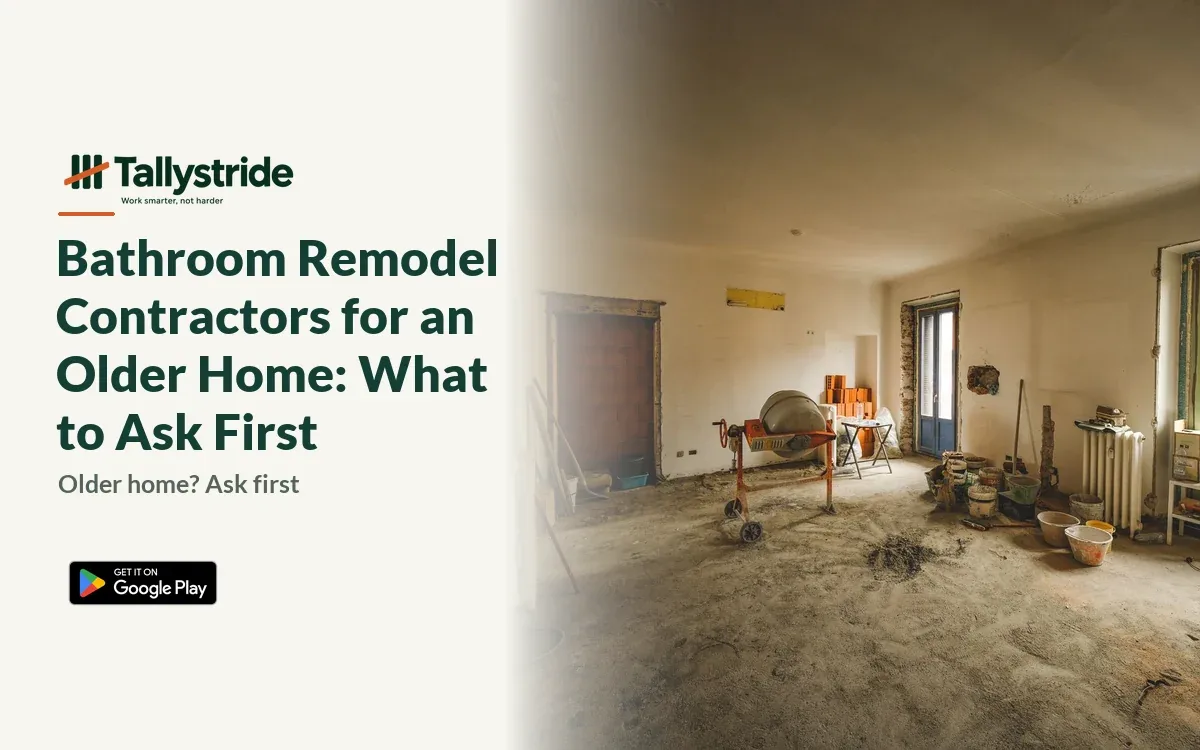
Bathroom Remodel Contractors for an Older Home: What to Ask First
If your house was built before 1978 and you’re lining up bathroom remodel contractors, there’s one question that matters more than tile samples or faucet finishes: does this crew know how to work around lead paint safely. The same question applies if you’re interviewing kitchen remodel contractors for a gut-and-redo. Older houses hide old paint layers under newer coats, and tearing into walls, cabinets, or trim can release dust you can’t see and shouldn’t breathe.
Older houses can still be remodeled safely with the right crew and the right questions before anyone picks up a crowbar.
Why pre-1978 houses need extra care
The federal government banned consumer use of lead-based paint in 1978, but it’s still present in millions of homes built before that year. The older the house, the more likely lead paint is somewhere in it: under the vanity, behind the tile, on the window trim you’re about to rip out.
Lead paint sitting quietly on a wall for decades poses little risk. Disturbing it during a renovation is what creates the danger. Sanding a cabinet, cutting into a wall for new plumbing, or prying off old trim can all create lead dust and chips that are harmful to adults and children. The EPA is direct about how little it takes: even a small amount of lead dust from a home renovation project is enough to put a family at risk, kids especially.
This is general background from the EPA, not legal advice for your specific property or state. If you have real concerns about your house, a certified lead inspector or your local health department is the right place to ask.
What EPA lead-safe work practices require
The EPA runs a program called the Renovation, Repair and Painting Rule, or RRP Rule. It requires that contractors performing RRP work in pre-1978 homes, child care facilities, and preschools be lead-safe certified. That’s a federal requirement for anyone hired to do the work, not a suggestion a contractor can shrug off.
Lead-safe certification means the contractor and crew have been trained in a set of techniques meant to prevent lead exposure during renovation and repair work. In practice that covers sealing off the work area, using wet methods to control dust instead of dry sanding, cleaning up with HEPA vacuums rather than a regular shop vac, and handling waste so dust doesn’t travel through the rest of the house. You don’t need to memorize the technical details yourself. You need to confirm the contractor has the certification and actually follows through on it, which is what the checklist later in this post is for.
What a homeowner can and can’t do themselves
Here’s a detail that surprises a lot of people: the RRP Rule generally does not apply to homeowners doing renovation work in their own home. The rule does apply if you rent out part of the home, run a child care center there, or buy and flip houses for profit. If you’re just remodeling the house you live in, you’re legally free to demolish that old bathroom yourself.
Legally free doesn’t mean risk-free. If you decide to tackle any part of the job on your own, the EPA lays out specific steps for do-it-yourselfers, and they’re worth following even when you’re not required to:
- Figure out if lead paint is present. Find your home’s build year, and if you can’t determine it, treat the area you’re working in as though it has lead paint.
- Set up the work area: remove furniture and soft goods, seal floors and doors with plastic sheeting, and shut off forced-air heating or cooling so dust doesn’t spread through the ducts.
- Protect yourself with an N-100 respirator, disposable coveralls, shoe covers, and eye protection, and wash your hands and face every time you stop working.
- Minimize dust with wet sanding methods, a spray mister before cutting or scraping, and power tools fitted with HEPA-filtered vacuum attachments instead of dry sanding or grinding.
- Leave the work area clean at the end of every single day, not just at the end of the project.
- Control your waste by bagging debris, paint chips, and used protective gear in heavy plastic, and check your local disposal rules before you haul anything away.
- Clean one more time after the project wraps: mop floors, vacuum with a HEPA vacuum, and wipe down surfaces before letting family back into the space.
That’s a real amount of extra work layered on top of an already demanding weekend project. It’s a big reason many homeowners decide that hiring bathroom renovation contractors who already own the gear and run this routine every week beats setting up an airlock out of plastic sheeting themselves.
How to check that bathroom remodel contractors are actually certified
Anyone can claim to be careful. What you want is proof. The EPA recommends homeowners find an EPA or state lead-safe certified contractor rather than taking a verbal assurance at face value. A certified firm should be able to produce a firm certification number on request, and you can cross-check that number through the EPA’s own search tools or your state’s lead program if your state runs its own.
The EPA also points to a visual cue: look for the official lead-safe logo on paperwork, trucks, or marketing materials, since firms that have gone through certification tend to display it. A contractor who can’t tell you their certification number, or gets vague when you ask directly, hasn’t earned the trust of working in a home with small children or anyone who’s pregnant.
It’s also worth asking who on the crew holds individual certified renovator training, not just the business as a whole. A firm can be certified while still sending an untrained helper to do the actual sanding and cutting, so ask specifically who will be on site doing the demolition.
Signs of a well-organized contracting business
Lead certification is the non-negotiable item, but it’s not the only signal worth reading at that first visit. How a contractor runs their paperwork tells you a lot about how they’ll run your project.
A contractor who hands you a written, itemized quote instead of a number scrawled on the back of a business card is already showing you something. The same goes for invoices: a professional outfit produces a clear document with their business name and a breakdown of labor and materials, not a text message asking for cash. Contractors who keep tight records of their own business, including things like how 1099-NEC forms work for the jobs they take on and what they owe in taxes and when it’s due, tend to be the same contractors who keep tight records on your job site too: change orders in writing, a clear schedule, receipts for materials.
If travel or mileage shows up as a line item on your estimate, ask how it’s calculated. A contractor who tracks job mileage carefully, the kind of record keeping covered in guides on mileage tracking for contractors, can usually explain that cost on the spot instead of guessing at it after the fact. Checking lead-safe certification still comes first. These business habits are a second layer that tells you whether the person behind the certification number actually runs a business you want in your house for three weeks.
Checklist of questions to ask at the first visit
Bring these questions to every bid, whether you’re talking to bathroom remodel contractors or kitchen remodel contractors, and write down the answers so you can compare bids later:
- Are you and your firm lead-safe certified under the EPA’s RRP Rule, and can you show me the certification number?
- Who on your crew will actually be doing the demolition and sanding, and are they individually trained in lead-safe work practices?
- What steps will you take to contain dust, including plastic sheeting, sealed vents, and HEPA vacuums, before you start tearing anything out?
- How will you test or assume whether lead paint is present in the areas you’re opening up?
- What is your plan for daily cleanup during the project, not just at the end?
- How will you collect, bag, and dispose of demolition waste?
- Will I receive a written quote before work starts and an invoice I can review when it’s done?
- What happens if the job uncovers something unexpected, like rotted subfloor or old plumbing, and how will that change the price?
A contractor who answers these without hesitation, and who treats the lead-safe questions as routine rather than annoying, is telling you they’ve done this before on a house like yours.
If you are the contractor reading this instead of the homeowner, keeping your own jobs, invoices, and mileage straight matters just as much as the lead-safe paperwork does, and the Tallystride app for contractors from the same company behind this guide is built to handle exactly that on Android.
Sources
- EPA: Renovation, Repair and Painting Program for Consumers: explains why pre-1978 homes need lead-safe certified contractors, the 1978 lead paint ban, and how to find a certified contractor.
- EPA: Lead-Safe Renovations for DIYers: explains the RRP Rule’s requirements, who the rule does and doesn’t apply to, and the step-by-step lead-safe practices for homeowners doing their own work.
Tallystride is free to download for Android, and Pro is a one-time purchase with no subscription.
Guarding your family, your business, your future.